Caravaggio, The Taking of Christ, 1602

Caravaggio, The Taking of Christ, 1602
Tenebrism

Tuesday, January 6, 2015

MET picture


Self-Portrait Looking at The Last Supper (1982-84) : Marisol 
-Painted and drawn wood, plywood, brownstone, plaster, aluminum
-121x358 in. 

   Marisol bases this contemporary assembly of sculptures on Leonardo da Vinci's iconic Last Supper
She keeps da Vinci's monumental size, as well as a similar perspective, regarding the arrangement of the figures, when looking at the image straight on. However, Marisol adds an onlooker to the scene (whom I assume to be herself, based on the title). This onlooker gives the piece an entirely different feel than Leonardo's Last Supper. When I look at Leonardo's, I am forced to focus on the details of the scene; to examine what is going on and pay attention to what Leonardo created. I am the onlooker, interpreting The Last Supper and forming my own personal opinions on it. When I look at Marisol's, I take a step back. I remove myself from my opinions, and instead look at the image through the perspective of the onlooker. I begin to think about the scene itself, as well as the artist's intentions, as opposed to just how "pretty it looks". There have been hundreds of depictions of the last supper throughout history, so it's amazing to me how Marisol can create an entirely different way of viewing the iconic image just by adding a second party to the scene. 

-Laura Kesnig 

Quarter 2 post 2

   The original issues stemming from the Michael Brown shooting in Ferguson have recently been turned on their head. The "protestors", rallying against supposed rampant police brutality, argued that "black lives matter" - even the mayor of NYC led a chant celebrating this mantra- indicating too many young lives have been unnecessarily lost due to overzealous, racist police work. The media ran with this and aired news stories 24/7 preaching the cruelties committed by law enforcement, every night broadcasting a new and different crime committed by police against minorities. 
   However, since the recent abhorrent murder of two members of the NYPD, this story has done a political 180. Now, national news has shifted from crimes by police against minorities, to showcasing crimes by minorities against cops. The original "protesters" unknowingly turned America's tide against them, overshadowing the real cause - inherent, perhaps unknowing, racism in American culture - with fanatical, nonsensical protests against those whose sole job it is to protect against harm -- law enforcement. 
   The current situation acts as an example of what is wrong with American media today, selling stories instead of investigating the news, and in doing so undermining a potentially generation-shifting civil rights movement.

-Laura Kesnig 

Monday, January 5, 2015

blog 7- MET

   The metropolitan museum of art is an extraordinary museum filled with incredible pieces of art work. I've never really appreciated art until I went there for the first time with this period 4 humanities class. I've been there 3 times since and I'm going again next week in hopes of seeing some more really cool pieces. Out of the four times I've been there within a couple months there has been this one painting that I've had to go back to see and I don't even know exactly why. There are about 400,000 pieces or so in the metropolitan museum of art (which I haven't even seen half of yet) and this one so far is my favorite. I guess it's because I find it so fascinating that his paintings are just a million little dots up close and you might not recognize what you are looking until you take a step back and see the bigger picture. It's kinda like that saying about life "If you just focus on the smallest details, you never get the big picture right."  I also love his paintings "all-overness" "the event" "after 'the event'" "'the best of the grid'" and many more.

    The name of the piece is Lucas I, it is an oil and graphite on canvas. This was painted by the American artist Chuck Close in 1986-87. Associated with the Photo- or Super-Realist movement of the late-1960s and 1970s, Close initially became known for the minutely detailed portrait heads he painted on a monumental scale in black, white, and gray. The subjects close uses mostly includes his friends and family,  many of whom are connected to the art world as artists, dealers, and collectors.


 I also took this picture of one of the stained glass pieces. 

 get the big picture right."  I also love his paintings "all-overness" "the event" "after 'the event'" "'the best of the grid'" and many more.

    The name of the piece is Lucas I, it is an oil and graphite on canvas. This was painted by the American artist Chuck Close in 1986-87. Associated with the Photo- or Super-Realist movement of the late-1960s and 1970s, Close initially became known for the minutely detailed portrait heads he painted on a monumental scale in black, white, and gray. The subjects close uses mostly includes his friends and family,  many of whom are connected to the art world as artists, dealers, and collectors.


 I also took this picture of one of the stained glass pieces. 


MET Pictures


This is a Roman statue of Artemis and a deer. Artemis was the Hellenic goddess of the hunt, wild animals, wilderness, and protector of young girls. She often was depicted as a huntress carrying a bow and arrows.


This is Van Gogh’s painting Wheatfield with Cypresses and it was painted in 1889. It is one of four oil paintings in his wheat field series. All were painted in the  Saint-Paul-de-Mausole mental asylum at Saint-Rémy near Arles, France, where Van Gogh was a patient for a year.             


This is a Knight and the warhorses they road on were commonly known as Destriers. They were important in history because they introduced fighting on piggyback which required a lot of balance and skills required in mounted combat.Training to become a Knight took 7 years as a page and another 7 years as a Squire before they were able to be a Knight.                

 
This is a sphinx which is a mythical creature with the body of a lion and a human head. It is known to be treacherous and merciless. Those who cannot answer its riddle are killed and eaten by this ravenous monster.

Homosexuality blog post 8

          Today in issues and tolerance we learned about the persecution of homosexuals, and I know our class will be talking about this topic soon so I wanted to find down information on it and share my thoughts. Some background information on homosexuality is that discrimination against homosexuals  started in the mid-centuries. Many countries would give penalties of a fine or improsonment to anyone who was homosexual. Discrimination against homosexuals still exist today. Some people who are very religious consider being homosexual as a sin and that they should be isolated and sent to hell. This is some background information on homosexuality.

          My thoughts on homosexuality is that I feel people should be who they are without having to be discriminated because of it. We're all human and we should treat people badly for whoever they are. It's so terrible to think of how people lost their lives because of this. I know someone who committed suicide because they were teased for being gay. People don't realize that they hurt others when they use derogatory words it hurts people's feelings and it leads them to hurting themselves people if people start to look down on them, they tend to look down on themselves. A quote I like to think of is the golden rule of "treat others the way you want to be treated," because I think people need to learn that discriminating against homosexuals and really anyone is wrong and mean. So the question I lrave off is that the next time you are going to say something that could hurt someone else, think before you say because you never know what the destruction could lead to.

Sunday, January 4, 2015

Vincent Van Gogh Blog 5

Van Gogh's Beginning
While still in school, Van Gogh worked mainly in watercolor; few of these paintings surviving and gaining recognition. Throughout the next few years of his life, he began seeking commission work, starting with his uncle, a well renowned art gallery owner in Amsterdam. During this time, some of Van Goghs first master pieces were created, studying single figures in black and white, and experimenting with many different drawing materials. Later in 1883, Van Gogh began to draw multi-figure compositions, turning to the Hague School for further technical support in his works. After studying at the Hague School, Van Gogh began creating large sized paintings, destroying almost all of them except for The Potato Eaters and its companion pieces The Cottage and The Old Tower,  the two pictured here:


 Self Portraits
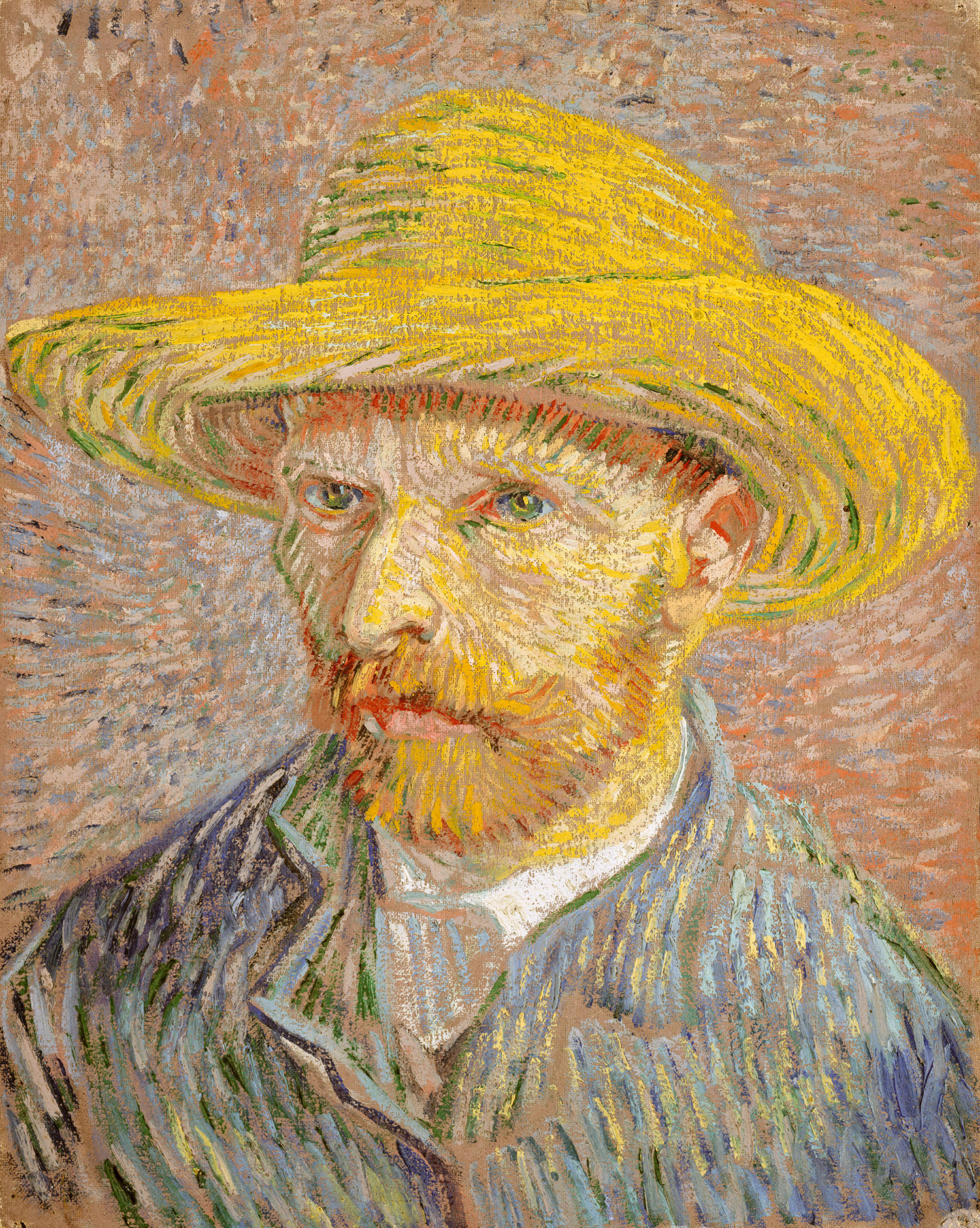
Over the course of 3 years, Van Gogh had also painted 37 self portraits. These portraits vary portraying Van Gogh with and without a beard, with bandages from severing his own ear, and the most known, with a yellow straw hat. His most famous self portrait was sold for over $71.5 million dollars and is the most expensive paintings of all time, being his last self portrait and a gift to his mother for her birthday.
                       
Vincent Van Gogh suffered from mental illness and took his own life in 1890, with a self inflicted gunshot wound to the head. Van Gogh experienced many episodes of depression throughout his life followed by frequent, paralyzing anxiety and symptoms of bipolar disorder. When thinking of Van Gogh, people more often associate him with the incident of cutting off his own ear, The act of killing himself all together is associated with his depression, ending the life of a legend.                   

A Class Divided

Video A Class Divided (15 minutes)
https://www.youtube.com/watch?v=VeK759FF84s
The longer version is here (55 minutes)
https://www.youtube.com/watch?v=eWXB1S1jHKo


      When discussing racism and discrimination in class, I thought of this clip I had watched in past years called, "A Class Divided". Elementary teacher, Jane Elliot, conducted an experiment with her third-graders during Brotherhood week at her school. In the beginning of the week she simply explained to them that first, blue-eyed people were better than brown-eyed people. And so, the blue-graders would receive more time at recess, access to the playground, etc. I watched as the students turned on each other, dividing themselves simply because of the way they looked. Mrs. Elliot then gave the students collars to wear, so the brown-eyed kids could be spotted more easily. The class began to associate negative actions/traits with the brown-eyed kids and positive actions/traits with the blue-eyed kids, all because their teacher had presented this statement as a fact: blue-eyed people are better than brown-eyed people. The following day, Mrs. Elliot told her students she had lied to them: brown-eyed people are superior to the blue-eyed people. The students who had been inferior yesterday were now at the top and easily and happily, transitioned to this new trend. The students wearing the collars - both the brown-eyed and blue-eyed- felt lower of themselves and lesser than the other students. They both experienced the discrimination from their classmates, of not being good enough to play with them, or being blue/ brown-eyed  hence, stupid. One of the students engaged in violent action, because of teasing and name-calling. The other kid called him "brown-eyed". "Brown-eyed" had become offensive and a mark of their inferiority. Their collars were a stigma. Their eye colors defined who they were as people, the lesser people. The color of their physical trait had limited them to who they were. They had even began to believe the negative traits/actions were true for all the blue/brown-eyed people and were ashamed of themselves.
       I thought this video was really interesting because it was real. It was an experiment with third-graders whom you'd believe would be immune to negative thoughts and discrimination but it shows that we all can be easily influenced by what we see and hear, if we accept false statements as reality. Mrs. Elliott has instigated the divide within the class, but all the students chose to accept the statement she had given to them and the sentiment behind it as well. I think the students really learned from this experiment, because through they were able to experience discrimination first-hand and the injustice of it on a level that they were able to understand (as third-graders). The color of your eyes, nose, hair, or skin should not matter in how you treat people, and it is not a mark of lower value. This activity had taught the students the wrongness of racism - one they did not forget as adults.